Wednesday, September 23, 2020

Pandemic Must-Have: The Brent Bottle

Early on in the pandemic, Brent and I were concerned about him working on various construction sites and needing to wash his hands frequently (but concerned about using the shared biffy constantly).

His solution: the Brent Bottle!

He took a pop bottle, and his tiniest drill bit. Drilled three holes in the lid of a pop bottle. Filled the pop bottle with some bar soap shavings and water.

Voila! Portable hand-washer.

They say that soap and water is best for destroying viruses (better than hand sanitizer). Viruses have a lipid (oil) outer shell, and hand soap and dish soap are made to remove grease. Here... the CDC can explain it better than I can.

We carry a Brent Bottle in the car (fits handily in a beverage holder), and on my bicycle (fits handily in a bottle cage). Brent takes one to work with him every day.  To travel with the Brent Bottle, just screw in a little bit of saran wrap under the lid to stop it leaking.

You can include a squirt of liquid hand soap, or dish soap, in your Brent Bottle, but to make it more effective for re-filling during the day, Brent recommends using slivers of bar soap.  The slivers don't entirely dissolve in the water every time, so once you've emptied your Brent Bottle, you just add more water, give it a shake, and keep on going.

To use the Brent Bottle: Put one hand over the bottle lid and give the bottle a shake.  Then, squirt the soapy water into your hands and swoosh it around, and shake off your hands. Repeat. I tend to wipe my wet hands on my clothes to dry them a little, but Brent recommends just leaving the soapy water on your hands. That way, whatever you touch next (e.g., car door handle, steering wheel) also enjoys a dose of the COVID-killing goodness.

If you want your own Brent Bottle but don't have a drill (or a tiny drill bit), let me know. We can hook you up with a complete Brent Bottle, or even a "Brent Bottle Starter Kit" (a drilled pop bottle lid) to get you started making your own Brent Bottle.

Saturday, January 11, 2020

Stolpern um Meinen Stammbaum

Dies ist die Geschichte, wie ein zufälliger Fremder aus dem Internet zu einem längst verlorenen Cousin wurde.

Dank meiner Kollegin Cindy habe ich mich 2018 für Genealogie und meine Familiengeschichte interessiert. Dann entdeckte ich, dass es viele "Deutsche aus Russland" Einwanderer gab und ich wurde sehr interessiert. Ich wollte so viel wie möglich über sie wissen, weil alle meine Urgroßeltern Deutsch waren, aber sie kamen aus Russland. WER WEISS !! ?? (Nun, fast alle auf der Seite meiner Mutter, aber ... ich schweife ab).

Ich habe enorm viel recherchiert und so viel gelernt. Ich konnte meiner Vorfahren bis nach Russland und nach Deutschland zurückverfolgen und erstellte dieses Diagramm meiner Familienmigrationen, einschließlich einiger historischer Informationen darüber, was in der Welt während geschah Bestimmte Perioden, die die Migration nach Russland und dann nach Nordamerika auslösten:

Wenn Sie wirklich neugierig sind, können Sie ein PDF der ganzen wunderbaren Sache hier zu sehen. Ich habe auch ein "Ich in der Mitte" Diagramm erstellt, das die Herkunft meiner deutschen Vorfahren aus Russland zeigt (mit mir in der Mitte), das Sie hier sehen können.

Ich konnte keine Informationen für die Großmutter meines Vaters finden, die hier mit ihrer Familie abgebildet ist (sie und ihr Mann sind in der Mitte des Fotos):


Ein Großteil meiner Nachforschungen wurde auf Ancestry.de durchgeführt, und über den Stammbaum meiner Cousinin Jody fand ich den Namen meiner Urgroßmutter, Caroline Lagai. Ich bekam auch Kopien der Genealogie-Recherchen, die meine Mutter in den 1990er Jahren durchgeführt hatte - eine Reihe handgeschriebener Seiten (so akribische Arbeit - wow). Es zeigte den Namen meiner Urgroßmutter als Caroline Luggi an einigen Stellen und Caroline Laggi an anderen Stellen.

Ich wusste, dass Caroline und ihr Ehemann George Schneider von der Krim nach Calgary gekommen waren. Wie jeder andere Nachkomme von Deutschen aus Russland habe ich festgestellt, dass die Aufzeichnungen unserer Vorfahren Lücken aufweisen, als sie verloren gingen, zerstört wurden, zurückgehalten wurden oder nicht ins Englische übersetzt wurden Meine Information über Caroline endete.

Ich wurde von Caroline Lagai / Luggi / Laggi gequält. Keiner dieser Namen klingt deutsch, und ich konnte niemanden mit einem dieser Namen finden. Ich würde regelmäßig vergeblich nach Informationen über die Familie dieser Frau suchen.

Mitte 2018 habe ich mich bei LocateFamily.com umgesehen und einige Deutsche mit dem Nachnamen Laggai gefunden. Dies war keine exakte Übereinstimmung mit den Variationen, die ich für Caroline hatte, aber es war mit Sicherheit nah genug, um sehr vielversprechend zu sein. Ich schickte sofort E-Mails an alle zwölf, erklärte, wer ich war und versuchte, Informationen über meine Urgroßmutter und / oder ihre lebenden Verwandten zu finden. Natürlich habe ich fünf Minuten nach dem Versenden dieser zwölf E-Mails nach Antworten gesucht, aber keine kam.

Schließlich erhielt ich im Januar 2019 einen Brief von einem deutschen Mann namens Guido Laggai (einem Sohn von einer der zwölf Personen, an die ich geschrieben hatte). Er erzählte mir, dass er mit einer anderen gleichnamigen Familie in Ostdeutschland in Kontakt stehe und stellte mich Dietmar Laggai vor. Guido und Dietmar sagten mir:
1) Guido hat die Theorie aufgestellt, dass die Familie Laggai ursprünglich Hugenotten war und der Nachname auf Französisch La Quay war.
2) Obwohl Guidos Familie (katholisch) in Deutschland geblieben war, war Dietmars Familie (protestantisch) auf die Krim gezogen!

Ich tauschte mehrere Briefe mit Guido und Dietmar aus. Dietmar vermutete, dass sein Großvater und meine Urgroßmutter Geschwister waren. Ich blieb hoffnungsvoll, aber nicht überzeugt und schlug einen DNA-Test vor. Fast hätte ich Dietmars Reaktion auf der anderen Seite des Ozeans gesehen - entsetzt und die Arme in einer defensiven Geste erhoben. Ich habe die Idee fallen gelassen und wir haben weiter geschrieben und mit anderen verfügbaren Ressourcen recherchiert.

Ein unschätzbares Werkzeug, das wir hatten, war das, was Dietmar die Mühlbergrolle nennt. Dies ist ein überlebensgroßer gedruckter Stammbaum von Laggais (aka Laggey aka Laquai), den ein Familienmitglied namens Heinz Mühlberger durch Durchsuchen der Kirchenbücher in Neuenweiler in Hanau erstellt hat:


Die Mühlbergrolle zeigt ganz rechts Söhne von Johann George Laggai. Im Gegensatz zu den anderen Personen auf dem Baum zeigen diese Söhne Geburtsdetails, aber keine anderen Informationen. Durch meine Recherchen auf FamilySearch.org habe ich Geburtsregister für Laggais auf der Krim gefunden, in denen Männer mit den Namen dieser Söhne als Vater aufgeführt wurden. Dies würde erklären, warum es in Deutschland keine weiteren Aufzeichnungen für diese Söhne gab - sie alle wanderten auf die Krim aus und gründeten dort ihre Familien.

Leider sind nicht alle Aufzeichnungen aus der Krim Ende des 19. Jahrhunderts verfügbar. Es gibt drei Laggai-Geburtsregister in Neusatz, Russland (Krim), 1884 und 1885 (für drei der Söhne), aber keine anderen Aufzeichnungen außerhalb dieser Jahre. Caroline wurde 1888 geboren und wir wissen nicht, in welchem ​​Jahr Dietmars Großvater geboren wurde. Die Aufzeichnungen aus diesen Jahren sind entweder verloren oder zerstört.

Dietmar wurde mitgeteilt, dass seine Familie in einem Dorf namens Kambary gelebt habe. Aus den Einwanderungspapieren von George und Karoline ging hervor, dass sie aus einem Dorf namens Awell stammten, das in der Nähe von Kambary lag. Vielleicht war Karoline aus Kambary und zog nach Awell, als sie George heiratete? Oder waren Dietmars Großvater und Karoline Cousins ​​und keine Geschwister und lebten in verschiedenen Dörfern?

Jetzt, da wir vorhaben, diese Leute kennenzulernen, wird es realer. Eines Tages freute ich mich, von Dietmar zu hören, dass wir den Ancestry-DNA-Test durchführen sollten. Erfreut, aber auch nervös. Was ist, wenn wir uns geirrt haben, dass Karoline Laggai heißt? Was wäre, wenn Laggai der Name von Carolines erstem Ehemann wäre (sie war ungefähr fünf Jahre älter als George, es ist also möglich, dass sie verwitwet wurde)? Wie würden wir uns fühlen, wenn Ancestry sagen würde, dass wir NICHT verwandt sind? Ich hatte so viel Zeit und Energie investiert, um die Familie Laggai zu erkunden und Dietmar kennenzulernen. Ich wäre sehr enttäuscht gewesen, wenn die Ergebnisse negativ ausgefallen wären. Dietmar schickte sein DNA-Kit und eine Woche später schickte ich meins. Nicht lange danach schickte Guido auch einen.

Nun, die Ergebnisse für mich und Dietmar waren positiv. Der DNA-Test ergab, dass wir die 4. bis 6. Cousine sind. Wir warten immer noch auf Guidos Ergebnisse, aber es ist sehr wahrscheinlich, dass wir verwandt sind.

Laggai ist ein so seltener Name, dass es für uns alle eine große Sache war, einander zu entdecken. Ich bin mir sicher, dass die Entdeckung viel weniger Begeisterung hervorgerufen hätte, wenn ich einige lange verlorene Cousins ​​in einigen meiner geläufigeren Linien gefunden hätte. Ich kann es kaum erwarten, nach Deutschland zu fahren und meine längst verlorenen Cousins ​​zu treffen!


Stumbling Around my Family Tree

This June, Brent and I are doing a cycle tour in Germany.  Now, that will trigger a couple of questions for those of you who know me well:
  1. I thought you did big cycle tours every two years, on odd-numbered years only.  Why a tour this year?
  2. Why are you posting this on "Stumbling" instead of on "Faint of Heart" (your cycle touring blog)?
When we were preparing for our 2019 France trip, we spun off a separate trip for this year to do a "Bike and Barge" with Brent's brother and niece.  By the time the "Bike and Barge" plan fell apart, I had already told some long-lost cousins in Germany that I was coming to meet them in 2020 (an add-on to the Bike and Barge), so Brent agreed to a "bonus tour" this year to go meet my cousins.

When I decided to write this article, I had to decide where, exactly, to post it.  I thought about "Faint of Heart", and I decided no, although meeting the cousins will happen on a cycle tour, it's not at all a post about cycle touring.  I thought about posting it here on "Stumbling Around the Rockies", because there's definitely a lot of "stumbling" involved.  I could, of course, start a new blog, "Stumbling Around Genealogy", but that would mean I'm going to write more articles about genealogy, and I probably won't do that.  Since I've posted about stumbling around more than just the "Rockies" in this blog, I've decided this is where I would put it.

Anyway, on with the story of how a random stranger from the internet became a long-lost cousin.  

In 2018, thanks to my colleague, Cindy, I got interested in Genealogy and my family history.  Then I discovered that "Germans from Russia" was a thing and I was hooked - I wanted to know as much as I could about these immigrants to North America (and other places) as all four of my sets of German great-grandparents were, apparently, from Russia.  WHO KNEW!!?? (Well, except for almost everyone from my mom's side of the family, but... I digress).  

I did a tremendous amount of research, and learned so much.  I was able to trace some of my ancestors all the way back through Russia and to Germany, and created this beautiful (if I do say so myself) diagram of my family migrations, including some historical information about what was going on in the world during certain periods that triggered the migrations to Russia and then North America:

If you're really curious, you can see a PDF of the whole glorious thing here.  I also created a "Me in the Middle" diagram showing the origins of my Germans from Russia ancestors (fanning out from, you guessed it, me, in the middle) that you can see here.

I hit a road block, though, on my father's maternal grandmother, pictured here with her family (she and her husband are in the middle of the photo, my grandmother sits to her left - on the right, of course, for those looking at the photo):


A lot of my research was done on Ancestry.ca, and through my cousin Jody's Ancestry tree, I found my great-grandma's name, Caroline Lagai.  I also got copies of the genealogy research my mom had done in the 1990s - a set of handwritten pages (such painstaking work - wow).  It showed great-grandma's name as Caroline Luggi in some places and Caroline Laggi in other places.  

I knew that Caroline, and her husband, George Schneider, had come to Calgary from Crimea.  I have discovered, as has every other descendant of Germans from Russia, that the records of our ancestors have gaping holes in them from times when they were lost, destroyed, are being withheld, or have not been translated into English, so that was where my information on Caroline ended.  

I was endlessly vexed by Caroline Lagai/Luggi/Laggi.  None of those names is even remotely German-sounding, and I could find absolutely nothing for any German people carrying any of those names.  Every month or so I'd get a bug in my ear and I'd spend an hour or five researching like crazy for a clue to this woman's family, with no success.

Towards the end of 2018, I was poking around on LocateFamily.com and I found several German people with the last name Laggai.  This wasn't an exact match with any of the variations I had for Caroline, but it was surely close enough to be very promising.  I promptly fired off emails to all twelve, explaining who I was and that I was trying to find information on, and/or living relatives of, my great-grandmother.  Naturally, five minutes after firing off those twelve emails I started checking for replies, but none came.  

By the time I'd essentially given up on hearing back, in January of 2019, I received a letter from a German man named Guido Laggai (a son of one of the twelve people I'd written to).  He told me that he was in contact with another family of the same name in the east of Germany and he introduced me to Dietmar Laggai.  Guido and Dietmar told me that:
1) Guido has theorized that the Laggai family was originally Huguenot, and the last name had been La Quay in French;
2) While Guido's family (catholic) had remained in Germany, Dietmar's family (protestant) had also been in Russia, in fact, in Crimea!

I exchanged several letters with Guido and Dietmar.  Dietmar theorized that his grandfather and my great-grandmother were siblings.  I remained hopeful but unconvinced and suggested a DNA Test.  I could almost see Dietmar's reaction from way across the pond - horror-stricken, and arms raised in a defensive gesture.  I dropped the idea, and we continued to write, and research, with other available resources.

One invaluable tool that we had was what Dietmar calls the Mühlbergrolle.  This is a larger-than-life printed family tree of Laggais (aka Laggey aka Laquai) that a family member named Heinz Mühlberger created by scouring the church records in Neuenweiler in Hanau:


The Mühlbergrolle shows, way over on the bottom right-hand side, sons of Johann George Laggai.  Unlike the other people on the tree, these sons show birth details but no other information.  Through my research on FamilySearch.org, I found birth records for Laggais in Crimea where men with the names of these sons were listed as the father.  This would explain why there were no further records in Germany for these sons - they all immigrated to Crimea and started their families there.  

Unfortunately, the records from Crimea during those years are spotty.  There are three Laggai birth records in Neusatz, Russia (Crimea) in 1884 and 1885 (to three of the sons), but no other records outside of those years.  Caroline was born in 1888, and we don't know which year Dietmar's grandfather was born.  The records from those years are either lost or destroyed.  

Dietmar was told that his family had lived in a village called Kambary.  From George and Karoline's immigration papers, I could see that they had been from a village called Awell, which was close to Kambary.  Perhaps Karoline was from Kambary and moved to Awell when she married George?  Or perhaps Dietmar's grandfather and Karoline were cousins, not siblings, and lived in different villages?  

Now that we are going to meet these folks, it has gotten pretty real.  I was very pleased one day to get a message from Dietmar suggesting a DNA test through Ancestry.  Pleased, but also nervous.  What if we were wrong about Karoline's name being Laggai?  What if Karoline had been married before George, and Laggai had been a married name (she was something like five years older than him, so it was possible that she could have been widowed)?  How would things play out if Ancestry said we are NOT related!?  I had invested so much time and energy in researching the  Laggai family, and connecting with Dietmar, I would have been pretty deflated if the results were negative.  Dietmar sent in his DNA kit, and a week later I sent in mine.  Not long after, Guido sent one in as well.

Well, the results for me and Dietmar have come back POSITIVE.  Ancestry has declared us to be 4th-6th cousins.  We are still waiting for the results on Guido, but it is pretty unlikely that we are not related.  

Laggai is such an uncommon name that it has been a pretty big deal for all of us to have discovered one another.  I'm sure that if I found some long-lost cousins through some of my less obscure lines, the discovery would have been met with much less enthusiasm.  I can't wait to go to Germany and meet my long-lost cousins!

Re-told in German here.  

Saturday, September 1, 2018

No Such Thing as Bad Weather

Us outdoor enthusiasts like to say 'there’s no such thing as bad weather; only bad clothing'.  

But what, exactly, constitutes good clothing for enjoying outdoor activities in winter?  My answer to that question is a little different from what I’ve seen/heard, so this blog entry is going to share my personal strategy for getting out in winter and LIKING it. 

Most of us already know that cotton is the “death fabric” in winter and we should avoid it at all costs.  But there are some surprising other fabrics that I’ve learned to avoid in winter as well, for example, polar fleece, and any “wonder” fabrics touted as being great “wicking” fabrics for avoiding having moisture held against your skin.  With both fleece and "wicking" fabrics, I have a problem with getting (and staying) chilled after I've finished an activity.  

Now that I’ve taken away fleece and all of those fancy “wicking” fabrics, what am I left with?!  WOOL!  See my 2012 blog, A Little Wool-vangelism.  Wool is practically the only fabric I wear in winter.  I stay warm during the activity.  More crucially, I do not get chilled to the bone AFTER the activity.  It takes a lot of time, and a lot of sweat for it to start stinking, which is why it’s also my fabric of choice for summer cycle touring – you’ll never see me in a fancy cycle jersey, as awesome as those are. 

I am one of those people who gets cold easily, stays cold, and HATES being cold, yet I love my outdoor winter activities.  Here’s my list of winter must-haves (and must-dos) for enjoying myself:


ItemNotesWhere to Get
Bra For winter activities, I skip wearing a bra altogether. I haven’t yet found one that does not contribute to my getting chilled, and since I’m “appropriately endowed” to go without, I do.
Buff
A buff is a great, versatile piece of gear. You can wear it on your head, around your neck, around your face, and even under your cycle helmet. In fact, I wear a buff under my helmet every single time I ride because it keeps me warm when I need warm, and protects me from sunburn on my forehead and neck when it’s sunny out. You can get merino buffs (yay for wool), and the “polar fleece” buffs are my exception to my “no polar fleece” rule because they’re great scarf substitutes and you can take them off before they contribute to getting chilled when you’re finished your activity.
I like PlanetBuff (now PlanetGear) for getting buffs but you can now get them at pretty much any outdoor store. Be mindful of the fabric you’re buying, though… there are a lot of knock-offs out there that won’t give you what you need.
Gloves Sometimes, during your activity (e.g., having lunch) you have to take your gloves off. Any time I take my gloves off, I stick them under my jacket into my arm pits. That keeps them nice and warm so when I put them back on, they give my hands a nice boost of warmth instead of keeping them sufferingly cold.
Merino Shirts
I own short-sleeved merinos, long-sleeved merinos, and turtle-necked marinos, and I layer them according to the weather. Merino wool is non-scratchy so you can wear it right against your skin, and as I’ve said (multiple times) before, they don’t pick up the stink that other fabrics do. Wool is the only fabric that I’ve discovered that I can wear in which I do NOT get overly chilled after I’m done my activity.
You can buy merino shirts at the outdoor stores, but they’re often over $100 for one shirt. Look for a source for them that is not quite so dear. I used to buy Segments brand merino shirts at Costco. You can still get some merino at Costco. You can also, apparently, buy Segments brand on Amazon.
Merino Longies If merino is good enough to wear against my torso, it’s certainly good enough to wear against my legs, and I do. All the same advantages. Ditto for the shirts above. I believe merino longies are still available at Costco.
Wool Sweaters I own a variety of wool sweaters – pull-overs, and cardigans. Since regular wool is NOT non-scratchy, I never wear it right against my skin – only merino for that. But you can add as many wool layers as you like/need over top of your merino to keep you warm. Don’t wear a heavy coat – one or two good wool sweaters under a shell jacket is perfect. My favorite wool sweaters came from thrift stores. You can get great deals on the wool layers you need. I also love my alpaca wool sweater that I ordered from South America, and my pretty Irish wool sweater that I bought… in Ireland.
Magical Pants by Lole For a lot of winter activities, especially cross-country skiing
and cycling, your thighs are a“leading edge” for cold air. If you have a problem with the fronts of your legs getting cold, I highly recommend “Magical Pants” by Lole, which have insulated panels down the front. If you buy the kind with bright colored panels, note that they wear very large (order at least one size smaller than usual), and if you buy the kind with the olive green-ish panels, note that they wear very small (order your usual size, or one size larger than usual).
Lole web site, Lole store, or e-Bay.
Bicycle Pogies
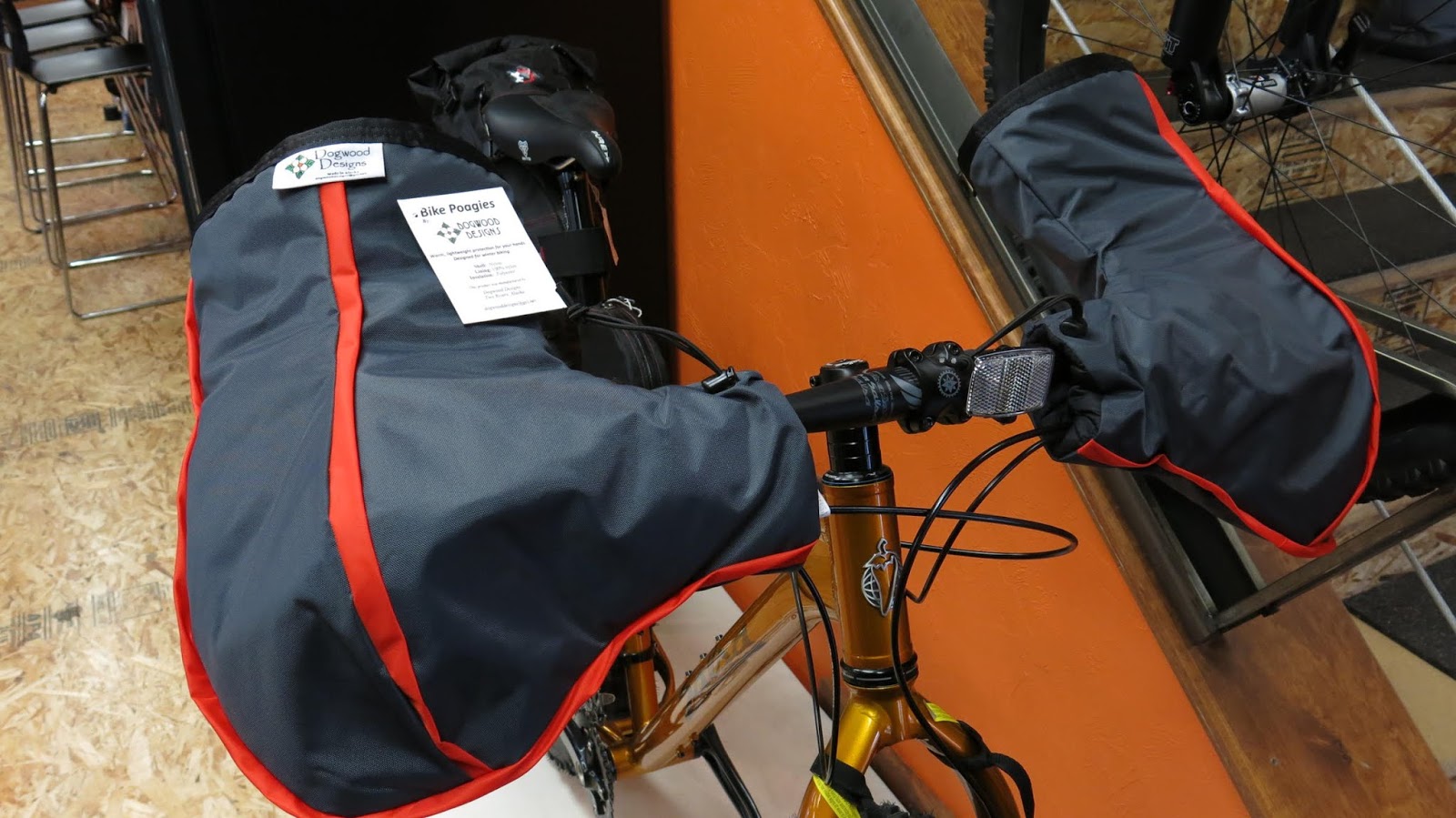
Pogies are covers that you attach to your bicycle handlebars that you can put your hands inside. When cycling in colder weather, your hands are another “leading edge” that can get extremely cold, and the right set of pogies will completely solve that problem.
Your favorite bike store.
Bicycle Overshoes Overshoes slip on over your cycle shoes (leaving a hole at the
bottom for your clips) to prevent your feet (another “leading edge”) from getting too cold. They work, and they’re really really worth it.
Your favorite bike store.

Monday, October 2, 2017

Bed Bug-Proof Your Bed

Stumbling around (everywhere) is great fun, but it does have its risks as well.  One modern-day risk is bed bugs.  EEEUUUUUUUUWWWWWWW!!!   Bed bugs can hitch a ride on you from hotels, libraries, theatres… all kinds of places.  They can also just make their own way into your home (especially if you live in a multi-family structure, which Brent and I do).

With our globe-trotting lifestyle, Brent and I have anticipated these horrifying visitors for a long time.  This summer our luck ran out and the visitors arrived.  In a panic, we did a tonne of research and took immediate action to begin the arduous task of ridding ourselves of them. 

Interestingly, before we got to the point of calling an exterminator, we realized that we’d contained the infestation all on our own (with good advice from a neighbor, the internet and some library books).  We’ve been bite-free for several weeks, and are pretty confident we prevented a worse infestation.  

But just because Brent and I got lucky and had an easy time of it AFTER infestation, that doesn’t mean YOU will.  Lots of folks have to go through a time- and effort-intensive, not to mention grossly expensive, process to rid themselves of the visitors.  I’d like to share what I’ve learned about bed bug-proofing your bed as an important aspect of PREVENTION.  Preventing an infestation being infinitely preferable to eradicating an infestation. 

There are two main things you can do with your bed to prevent an infestation:
  1. Make your bed impossible for the bugs to infiltrate
  2. Make your bed inhospitable for an infestation in case bugs do infiltrate

Make Your Bed an Island

Bed bugs cannot fly or jump, and they have trouble walking on slick surfaces (they CAN walk up walls).  This makes it super easy to turn your bed into an island unto itself:
  1. Move your bed far enough from walls and other furniture to ensure that your bedding does not touch anything (walls, other furniture, etc). 
  2. Ensure that your bedding does not touch the floor.  I use big safety pins to pin up the corners of our comforter so the corners can’t touch the floor.
  3. Make it impossible for the bugs to crawl up from the floor.  Make sure your box spring is raised up on legs.  If the legs are slick metal themselves, that may be all you need to do.  With wooden legs, or other surfaces that bed bugs can climb, you can add a level of separation by sitting the legs inside of slick metal containers.  You can add even another level of protection by putting oil (e.g., baby oil) inside the slick metal container so that if a bug makes it into the container, it drowns in the oil before it can journey up the bed leg.  If you don’t want your bed legs to come in contact with the oil, use two nested containers: an inner one for the legs to sit in, and a larger one to contain the oil which the inner one sits in. 
know doing these things really messes with your Martha Stewart Mojo, but trust me... it's worth it. 

Make Your Bed Inhospitable

In case a bed bug is able to reach your Island Bed, make sure you make it as hard as possible for her to set up camp.  
  1. You can buy bed bug proof mattress and box spring covers.  Buy them and use them.  For our box spring, instead of a commercial cover, Brent took a large sheet of plastic and encased the box spring in plastic, taped securely like a giant birthday present.  We use an off-the-shelf bed bug proof mattress cover (under our regular mattress cover). 
  2. If there’s any chance that you have a bug (or bugs) in your bed already, in addition to encasing your mattress and box spring, you should “process” your bedding by running everything through a hot dryer for an hour to kill any bugs.  You can run your mattress cover and bedding through the washer and hot dryer.  Run your pillows through the dryer as well.


Be safe out there, and seriously… don’t let the bed bugs bite!  Don’t even let ‘em get in bed with you.  

Tuesday, July 18, 2017

Cycle Touring as a Weight-Loss Strategy

I am not a super-fit hard-core anything.  I know - shocker.  But I am an enthusiastic participant in outdoor activities, and have recently moved “cycle touring” up to the top of my favorite pastimes.

Now, one would think that piling 50lbs of gear onto one’s bicycle, and going out and riding about 50km per day with it, up and down hills, on gravel, cobblestones and “Edmonton surface” would be a pretty good way to shed a few pounds.  If one thought that, sadly, one would be (mostly) wrong.

Brent and his friend, Doug, rode across Canada two years before we met.  Brent is fond of saying that you gain weight for the first three weeks of a cycle tour, and then the weight starts coming off.  He did drop a bunch of weight on his big tour (after his initial three weeks of gain), but he also gained a shed-load of weight in the first year afterwards.

In the early days of our relationship, Brent decided he’d like to take me to do the Golden Triangle, which is a supported tour in the Canadian Rockies, of approximately 317km over three days.  “Woo-hoo,” thinks I, “this will give my metabolism a great kick in the arse and I’ll come back a lean, mean cycling machine”.  Wrong.  I trained some before the tour.  I did most of the tour (although I dropped out of the last section due to exhaustion and traffic dangers).  I came back about three pounds heavier than I’d left.  “What the pudge?!” thinks I.

A few years later, and a few more pounds in the upward direction, Brent suggests that we take a month off and cycle tour in Australia.  Taking off a full month from work was a pretty big deal to me at the time, but hey, when the love of your life wants to take you off to the other side of the world to see what that’s all about, you go.  And, “Woo-hoo,” thinks I, “three days may not have been enough to kick my metabolism in the arse, but a full month!?  That will for sure send me back a lean, mean cycling machine!”  Wrong.  I came back about three pounds heavier than when I left.  I blamed it on cycling less than we’d planned (scary scary roads in Tasmania), and eating more Australian licorice than I’d planned.

A few years later, and even more pounds in the upward direction, Brent and I were off for a six-month tour in Europe.  That’s right folks - SIX MONTHS.  “Woo-hoo,” thinks I, “if Brent is right about the three weeks thing, then a six month tour will surely send me back a lean, mean cycling machine!”  You can see where this is going.  Wrong.  I came back about the same weight as when I left, which was dreadfully high for my tiny frame.  I had even planned for appropriate weight management for the trip.  I would rein in my calories when we stopped riding, manage my caloric intake very carefully when we got back to Canada, and I would blog about it, which would keep me on the straight and narrow.  Unfortunately, we stopped cycling a full month before our trip was done, instead of cycling right to the end as planned, and no, I didn’t do a very good job of reining in my caloric intake for that last month.  When we got back, it was winter and I had crippling tennis elbow, so I was not active enough, and I didn’t do a very good job of reining in my caloric intake that winter either.  My weight increased more yet.

Two years later, we headed back for a month of touring in Germany.  I may not be a hard-core super-fit anything, but “stubborn” I can do.  I’m determined this time to get some weight loss out of this tour.  I joined a gym the November before, started diligent calorie tracking, and started training for the tour, which would be the following June.  By the time of the tour, my weight had come down and stabilized at about seven pounds lower than my highest.  I still had the pipe-dream about coming back lighter than when I left (yes, “stubborn” I can do).  True to Brent’s mantra, I seemed to have gained weight for the first three weeks of the tour, which, let’s be honest, was pretty much the whole trip (we didn’t ride for the last three days).  But, hey, I dialed back my calories for those three days, and have been tightly managing my calories since we got back two weeks ago.  I’m staying good and active (it’s summer this time), and my weight is drifting down slowly.  I came back at about the same weight as I left, but that includes some extra muscle (so, I guess, some fat gone), and the weight is drifting down.

Hope springs eternal.  And if it doesn’t work out this time, well, there’s always France in 2019.  You know, because the meals and portion sizes in France are healthier than in Germany…

Thursday, July 6, 2017

Cycle Touring Hardships

Compatible Travelers
In 2015, Brent and I did a six-month cycle tour in Europe, and our friend, Laura, joined us for a month-long portion of that tour. She was bitten just as hard by the cycle-touring bug as I was, and she and I have spent the last couple of years scheming about all the tours we want to do. In June of 2017, the three of us went back to Germany to ride the Romantische Straße and the Mittelrhein, for the first of what we hope will be many return cycle touring trips.

The trip to Germany reminded me of how well Brent, Laura and I travel together. It’s also reminded me that a fourth travel companion in 2015 did not find our travel style, or the trip, a complete joy.

We’ve been working on talking a number of friends into joining our next tour in France in 2019. I thought it might be a good idea to warn those fine folks about some of the less-than-ideal circumstances they might encounter in 2019 so they can make a properly-informed decision about joining us.


Here are some of the “hardships” we anticipate for folks:

  1. Early Start
    Early Starts: No one is obligated to take early starts, but if you want to ride with Brent, Laura
    and me, you have to be prepared to have wheels rolling every day by 8AM at the absolute latest. This is not only our preference, but we also find there are a number of advantages to doing this. For example, you can get your daily riding done before the worst heat of the day (if the day is going to be hot); you can get your daily riding done before the afternoon rain showers (if there are going to be afternoon rain showers); you are less likely to encounter problems getting a spot in the campground because you’re some of the first ones to arrive. If you want to join us on a tour, but don't want the early starts, you can certainly set your own start times and ride by yourself, or you can try to rally some other late-starting folks to form a “second group” if you like. If you do, you must be prepared to make your own way during the day, stay in touch via text (if our technology is cooperating) to confirm where we’ve stopped for the night, and take your chances on getting a spot at the campground (no, we can’t reserve spots for you each day). In the case of a heat wave, we might even adjust to “wheels rolling” by 7:00 (instead of 8:00) to beat the heat.


    Zeltplatz at Füssen
  2. Campgrounds: A lot of us are used to the peace and serenity of backcountry campgrounds.
    That’s not what we’ll encounter on a cycle tour. We’ll be staying in side-of-the-road campgrounds with campers stacked one on top of the other. They can be extremely crowded and noisy (this is more of a problem in Germany than in France). Laura recommends "safety grade" earplugs and says the campgrounds can be "like Banff campgrounds on the May long weekend before the alcohol ban was put in". As far as we know, in France, you at least get your own assigned site. In Germany, tents don’t even get an assigned site in most places – you’re just sent to the “Zeltplatz” (tent place), which is a big open area, and you pitch wherever there’s an empty patch of grass. The disadvantage of assigned sites, of course, is that the campground might be full when you get there (see early starts).

  3. Camping… a LOT: Laura, Brent and I prefer camping. It is easier and more flexible (and easier on the budget). Given the choice, we will almost always choose camping. For example, on our 2017 tour, we checked into Penzions 4 times due to bad weather and/or lack of campgrounds, plus a BnB for the end of the trip to prepare for going home. Other than that, we camped. You are not obligated to camp as much as we do, but if you choose not to, you’ll be in charge of making your own arrangements. Since we will have a tentative destination for each day, but no guarantees, you should not make reservations more than a day in advance. In 2015, I would make reservations in the morning for that night through booking.com. Besides complications with not finding a place at all, if you do manage to book into a place, it may be more expensive than you were hoping, it may be difficult to find in the town, and it may be straight up a freakin’ hill when you get there. When you get there, you have to unload your bike and carry EVERYTHING up to the top floor (yes, you’ll always end up on the top floor… just because). Camping is easier. I do recommend sticking with us on that.


  4. "First Coffee" near a Castle
    Coffee: We do not recommend bringing a stove nor cookware on the trip. We either eat cold food
    “off the bikes”, or in restaurants. It’s not worth it to haul the extra gear to prepare food (or coffee) in our opinion. If you decide to bring cookware and prepare coffee in the mornings that is absolutely fine, but remember the early starts – early starts don’t wait for coffee. If you don’t bring anything to prepare coffee, you must be prepared to wait for coffee. We stop for a short or long break every hour when riding, and we try to find coffee on the first stops, but we don’t always find a place. In 2017 we even had a day where we had to wait until the next day for “first coffee”!

  5. Food/Meals: Our tours are not “foodie” trips. We don’t spend a tonne of time and energy seeking the exact right meal for every meal – often we’re just fueling the machine. We buy groceries to carry with us (be sure to reserve some room in a pannier for groceries, or better yet, carry an insulated bag of some kind), and often have breakfast and/or lunch “off the bikes” (e.g., yogurt, rolls, volkenbrot, cheese, sandwich meat, fruit). When it’s dinner time we often have more choice, and sometimes we have a truly special experience, but often it’s “just a meal”. In France, restaurants don’t open for dinner until 7PM. By then, we’ve usually eaten off the bikes, or filled ourselves with pub food.


    A banana keeps us going for another km

    Side-of-the-road lunch

    Eating "off the bike"

    Is that a baguette?


  6. "Laundry Wine" in a Hotel Room
    Weight Gain: It is likely that you will GAIN (not lose) weight on a cycle tour. What else can I say about that? Don't get your hopes up about losing weight. If you did a longer tour than a month, that would likely happen, but as Brent always says, expect to gain weight for the first three weeks of a cycle tour. On a month-long tour, the last week isn't enough time to make a meaningful difference, especially when the last two or three days are reserved for chores and preparation to come home.  See my blog about this.

  7. Laundry and Hygiene: Cycle touring can be like extended backpacking. You have limited
    clothing with you, limited options for showers, and even more limited options for doing laundry. Europeans don’t have bathtubs like we’re used to. It is unlikely that you will be able to submerge your body into a tub of water on a cycle tour. We try to do a load of laundry every few days, but sometimes you go for longer than anticipated without being able to do some. Be prepared to stink. Be prepared to stink even when you’re on your way into a restaurant. Also, re: laundry… even when you get to do laundry, it’s not like doing laundry at home. A lot of European machines take (literally) three hours to do a load. You just may not get your turn at the machine. Be prepared to hang clothes instead of using a dryer (often a dryer isn’t even available). Be prepared to share laundry loads with others – we can’t all take our individual turn at a machine that takes three hours.  After a number of days fruitlessly searching for a working washing machine, we may even resort to doing "laundry wine" (washing the laundry in a bathtub... stomping with feet as though making wine).

  8. Smokers: Unfortunately, EVERYONE in Europe smokes. Yes… EVERYONE. And they smoke in restaurants. EVERYONE smokes, and they smoke EVERYWHERE. It’s actually the one thing that makes me feel like I’m happy to come home after a trip – just to get away from the damned smoke.

  9. Accommodation: We have to be extremely flexible about accommodation. Often what we plan works out, and sometimes it doesn’t. Maybe we don’t make as
    many kms as we planned. Maybe we actually make more. We don’t make reservations ahead of time. We breeze into town hoping for the best. Sometimes we have to keep on breezing into the next town…

  10. Sight-Seeing: We’re not going to be able to see everything, or visit every point of interest along the way. For the 2019 trip, I will “survey” the folks who commit to coming about what they want to be sure to see, and we’ll do our best to see those things, but be prepared to leave some things “on the table” for your next trip to the area. I’ll be trying to organize our “rest days” around areas with lots to see so that folks can see as much as possible, but we’re just not going to see everything.

  11. A "HOUG" in Germany
    Riding Expectations: We do our best ahead of time to know how far we’ll ride in a day, and how
    hilly it will be. But sometimes mistakes happen and we do extra in back-tracking to the route, and sometimes construction and detours happen. Try not to be too tied to your expectations of what the day will hold, because it may just hold more than you anticipated (and not always in a good way). Even on well-traveled, well-marked cycle routes HOUGs happen (that’s “Hills Of Unreasonable Grade”). One thing you can generally count on, though, is that we do take a break (short or long), pretty regularly, each hour.

  12. Road Surface: Often we have separated bike paths. Sometimes we’re on roads. Sometimes we’re on busier roads than we care for. Sometimes we’re on asphalt. Sometimes we’re on gravel. Sometimes we’re on dirt. Sometimes we’re on cobblestones (they’re the worst). Sometimes we’re on what I lovingly call “Edmonton Surface” (yeah, you know what that is).

  13. Accommodating: We intend to ride together. That means adjusting to the slowest-paced person. If someone is actually unable to do the trip, they’ll have to leave the trip (or do their own version of the trip). If someone just has a bad day, though, we’ll all have to adjust, slow down, and accommodate. If you’re the one having a bad day, and you don’t want to make everyone wait for you, there’s the option of “catching up” by train, but keep in mind that taking the train with your bike is NOT fun. We’re all “Outdoor Club” people. We know how to accommodate. Expect a lot of that.


    No one left behind

    Ann waits out yet another flat tire


  14. Your Rig: Freedom or Boat Anchor?: There will be times that your loaded bike will feel more like a boat anchor than anything else. You might have to push the whole thing up (and down) a set of stairs. You may have to load it on and off of trains. Everyone should help everyone else as much as possible, but be prepared to haul that rig around if/when necessary. Make sure you’ve chosen an appropriate bike. Brent, Laura and I can all help with that beforehand. Make sure your rig has been checked over and tuned up before the trip. If you’re likely to need new tires during the trip, consider getting them ahead of time rather than trying to buy and install them on the tour. If, during the tour, you experience a problem with your bike, deal with it ASAP and tell us about it. Don’t wait until you have a complete breakdown to do something. It’s easier to be proactive (i.e., when you’re actually in a town) than to deal with a breakdown out on the road. Note that we do not recommend EBikes. We don't know if you'll be able to get to a charging station frequently enough, and an EBike will be super-heavy to ride if it's not charged, and it will be SUPER-HEAVY to haul up and down stairs, onto trains, etc.


    Horrible rental bikes in the UK

    Reunited with Dewey after rental bikes

    Gabi's piecemeal rig

    Unexpected stairs across the Rhein

    Train station stairs

    Some trains aren't bicycle friendly

    Bikes on a train

    Loaded bikes on hooks


  15. Bailing Out: What if you take ill on the trip? What if you get injured? What if you get out there and you just can’t do it? What if you get out there and you just hate it? Think about how you’ll deal with that in case it happens. I will research some “bail out” points and strategies to help you out, but if you need to leave the trip early, you’ll need to be prepared to figure that out. A nice thing about the trip in 2019, is that there's a train that runs the length of our intended route (The Loire Valley), so bailing out by train will be logistically (if not technically... see "Your Rig") easy... relatively speaking.

  16. Other: We’ve done our best to anticipate what folks might perceive as hardships. But we’re not you, and there may be hardships awaiting you that we haven’t anticipated.

A work friend read this list of hardships and said it reads as though we don't really want other folks to come along with us. That could not be further from the truth. We absolutely want you to come along... we just want you to do that with your eyes open, and your expectations set for reality. Clearly we love these trips, and we want you to, too!


We really want you to come along

Right Laura?  Right..... Laura??

NEW FOR 2023!

I am hoping some friends will parachute in for some of our 10-week tour in 2023, so thought I should update the Hardships List with some new things that came to light from our 2019 tour:

17. Plans Change: Although we start a tour with a specific plan, sometimes we decide to change the plan.  This may be because of weather, or unforeseen political circumstances, or we just plain feel like it.  If you decide to join us, you should be prepared with your own plans and understand that, best laid plans being what they are, we may not end up being where we thought we would be.

 18. We Like Our Plan: Although we are flexible about recognizing when we need to change our plan, we're still very invested in our plan.  I often spend tens, if not hundreds, of hours researching and prepping for a tour.  If you come along, expect us to do everything we can to stick with our plan, which means not tossing it in the trash to do what you want us to do instead.  LR, I'm looking at you here.


Homemade Tour Plan

Planning Resources

Laura scored a new map

Reviewing the daily plan

19. Hot Starts: It's a real PITA to try and transport big boxes from the airport to some kind of "staging area".  Although it's nice to get your bearings and get over the jet lag for a day or two when you arrive, we've decided that that's not how we like to do things.  Instead, we prefer to unpack at the airport, load up the bikes and ride straight from there.  Don't worry... I'm really nervous about traffic so I do my best to find a safe route straight from the airport.  Your biggest problem will be riding with the jet lag.  Ask Brent how much he likes that...  At the end of the trip we try to spend two or three days in the city of our airport to prepare to go, but the ending brings its own challenges (which I'll do my best to mitigate before we leave... watch for the copious planning e-mails).


20. Rest Days (or lack thereof): Hardship 10 above mentions "rest days", which implies that we do those regularly.  We did, in fact, plan on doing them regularly for our tour in 2019 because we were catering to the beginners accompanying us.  Our normal touring rhythm does not include regular rest days.  Sometimes we do, in fact, do a rest day, but they only happen if we get really crappy weather, or one (or more) of us feels a great need for one.  Otherwise, we are on the move (even if for just a short distance) every day.

Followers